Before I wrote code, I was building worlds in GraalOnline
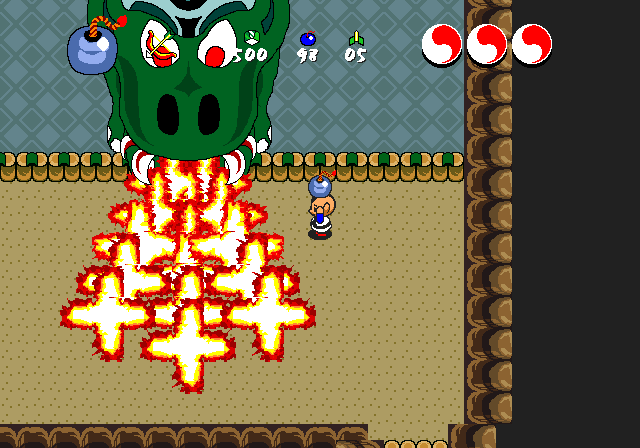
Games that shaped me — №1
Every maker has an origin story. Mine has a dial-up modem, a top-down pixel world, and a scripting language that talked back.
GraalOnline started life in 1998 as Zelda Online — a free, multiplayer take on A Link to the Past — before it was reborn as Graal: its own graphics, its own world, its own sprawling, slightly lawless community.
I didn't find it because it was famous. I found it the way you found everything back then — a link, a download, a login screen — and then suddenly there was a little sword-swinging avatar standing in a town full of strangers, and the strangers were real people.
Here's why it landed so hard: Zelda Online was, for me, a dream coming true. Back then I had exactly two obsessions — multiplayer games and The Legend of Zelda: A Link to the Past — and here was something that fused them into one. The world of Link to the Past, but alive, and full of other real people. I genuinely couldn't believe it existed.
For a while I just played. But Graal had a secret that quietly reframed everything for me: it shipped with the tools to make Graal.
There was a level editor — tiles, warps, NPCs you could drop anywhere — and a scripting language, GScript, with a familiar C-style syntax that was just approachable enough to be dangerous. Every NPC was a little self-contained program: event-driven, reacting to things like being created, touched, or talked to. The first time I placed a sign, wrote a few lines so it could say something back, and walked my character up to read it, something clicked. I wasn't hooked on playing the game anymore. I was hooked on making it.
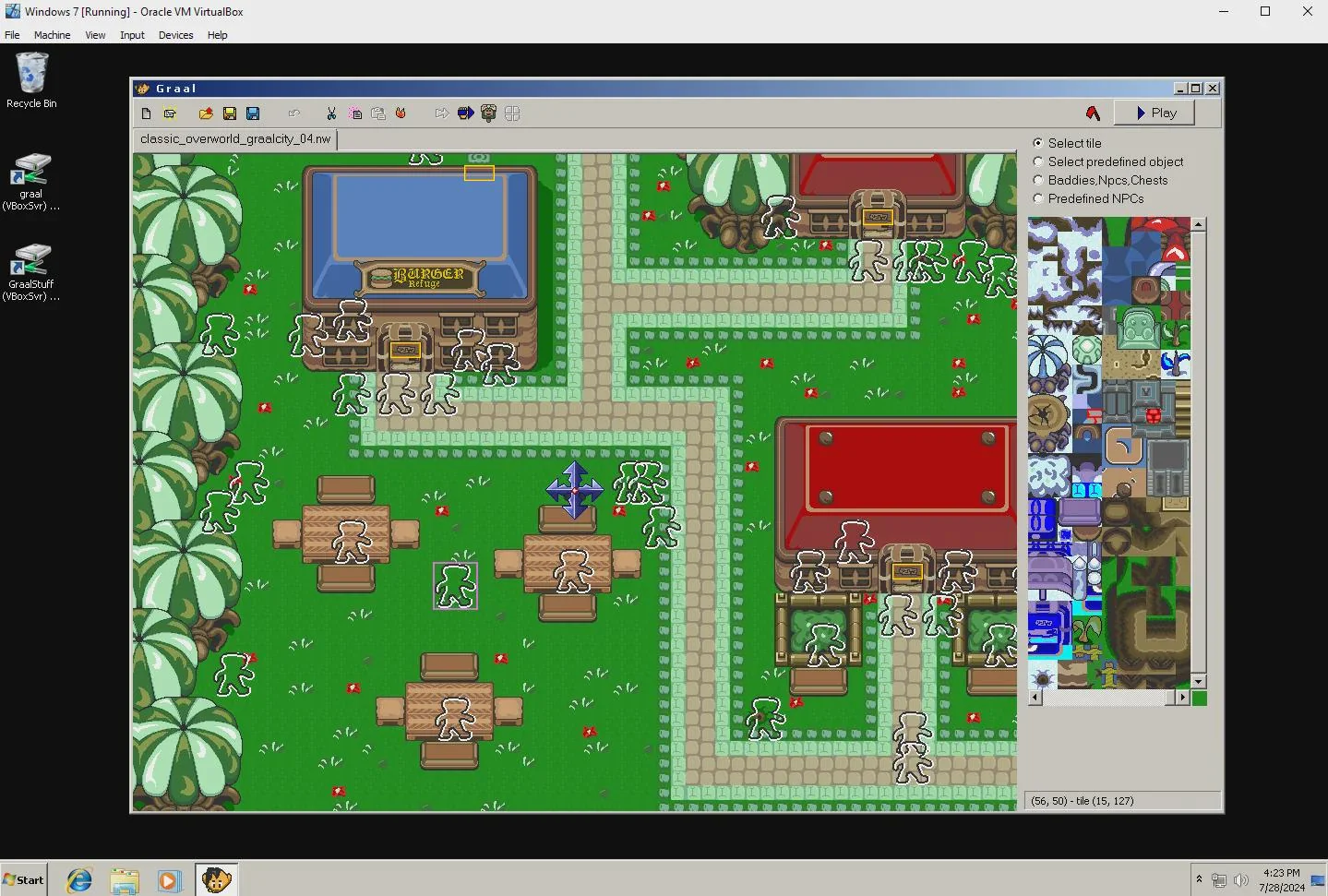
The game shipped with the tools to build the game. Once I saw that, I couldn't unsee it.
And people built. Players blew past the limits, hosted their own servers, and turned a Zelda clone into playerworlds — entire games stitched together by hand out of a level editor and a scripting language that was never really meant for what we asked of it.
Guilds, economies, dungeons, events, whole competing worlds with their own rules. None of it made by a studio. Made by us — kids and hobbyists trading code and tilesets in the dark. That's the idea that lodged in my head and never left: the people playing could be the people creating.
And the person who started it felt close, too. Stefan Knorr wrote the original Zelda Online in Java in 1998; when it was reborn as Graal, the client was rebuilt as a standalone Delphi program — of all things, a Windows Pascal toolkit most people reached for to write dull business software, here pushing a living 2D world over dial-up. I loved that mismatch: no sanctioned game engine, just whatever tools got it shipped.
And Stefan was remarkably generous with his time. He was around: answering questions, engaging with a swarm of kids who were busy taking his game apart to build their own. There was no faceless studio standing between us and the person who made it — just a maker who seemed genuinely glad you were making things too. That stuck with me as much as any line of GScript.
I think about Graal more than I'd expect to. Every time I build something that hands creative control to the person on the other side of the screen — an editor, a little system someone else can bend to their own ends — there's a straight line back to a kid in a pixel town, realizing the world was editable.
It taught me that the most exciting software isn't the kind you finish. It's the kind other people pick up and make their own.
GraalOnline was the first game that didn't just entertain me — it rewired how I see software. It won't be the last one I write about here.